KBR and Daewoo Shipbuilding & Marine Engineering (KD Consortium) has been awarded a front end engineering design contract by Eni East Africa for an FLNG facility for the Coral South Development Project located in Mozambique.
With the award, the KD consortium will be one of three consortia competing for the engineering, procurement, construction, installation and commissioning (EPCIC) contract to build the new floating LNG facility for Eni East Africa and its partners to develop the hydrocarbon discovery in the Rovuma Basin in Mozambique.
Only one consortium will be chosen to take the project to the EPCIC phase. Three important milestones of this combined FEED-EPCIC competition are:
1) FEED activities started in May 2014.
2) FEED completion date is set to be end of April 2015.
3) EPCIC offer submission is foreseen by end of May 2015.
The KD Consortium will provide the FEED for the Topsides, Hull and Subsea for the Floating LNG facility. The Topsides and Turret are being designed in KBR’s Leatherhead office while the hull and marine system are being engineered in DSME’s facility in Seoul, South Korea.
The FLNG facility will be a turret moored double-hull floating vessel, on which gas receiving, processing, liquefaction, and offloading facilities will be mounted together with LNG and condensate storage.
Eni’s Coral South Development Project is located in the deep waters of the Rovuma Basin, which straddles Mozambique’s Northern border with Tanzania. Coral South is situated approximately 150 miles northeast of Pemba and 30 miles from the Mozambique coast.
The contract value was not disclosed.
LNG World News Staff, October 16, 2014; Image: Eni
La avenida Lenin está congestionada. Las calles, de nombres como Mao Tse-tung o Salvador Allende, están agujereadas por las omnipresentes obras. Solo al caer la tarde en la capital mozambiqueña, Maputo, se relaja el zumbido constante de las perforadoras que ilustra el fuerte crecimiento de un país en el que se pronuncia sin cesar la palabra cambio.
Todo el mundo habla de cambio en Mozambique, en los despachos y en la calle. Las grúas y los coches que atiborran la avenida Marginal certifican la transformación económica. La aparición de un tercer partido político en el país, junto a la vuelta a las armas de la oposición histórica, la Resistencia Nacional de Mozambique (Renamo), insinúan movimientos políticos. Este miércoles, 10 millones de mozambiqueños estaban convocados a las urnas en unas elecciones para las que se prevé, de nuevo, el triunfo del Frente de Liberación de Mozambique (Frelimo), la formación en el poder desde que esta excolonia portuguesa se independizó, en 1975. Este grupo y Renamo se enfrentaron en una guerra civil entre 1975 y 1992.
Las enormes reservas de gas natural —las terceras más importantes de África— y de carbón —descubiertas recientemente en el norte de Mozambique— han disparado las expectativas en una de las naciones más pobres del continente, y han desatado la fiebre constructora en Maputo y ciudades como Tete y Pemba. Pero en un país que no ha conocido la alternancia de poder son pocos los que recogen los beneficios.
Se prevé el triunfo de Frelimo, la formación en el poder desde 1975
Los obreros de la gran torre intercambian con la vendedora Olga algunos meticales —la moneda local—. Olga les ofrece café y panecillos a la sombra de uno de los edificios más espectaculares de la ciudad, la gran torre que se levanta en Costa del Sol. La mujer vivía en este barrio antes del boom económico, pero las vistas al mar y el entusiasmo por nuevos apartamentos lujosos convirtieron la zona en algo codiciado. Y la echaron.
La circunvalación de la Marginal rodea la punta que forma la ciudad y conduce a Costa del Sol. “Cambio. ¿Qué cambio? Ellos comen de mi voto y se aprovechan del poder, quizás ellos están disfrutando del crecimiento pero yo estoy aquí, sucia, en la calle, y lo único es que me han echado de mi casa. Lo único que huelo es la corrupción”, se queja la vendedora con resignación.
El gas y el carbón son los grandes protagonistas de este sueño económico que beneficia a una minoría, a un selecto grupo muy vinculado al único partido que ha gobernado en Mozambique desde la independencia, la Frelimo. “Casi todos nuestros políticos tienen intereses económicos”, explica Edson Cortés, investigador del Centro de Integridad, hasta el punto que “compañías directamente relacionadas con el presidente han tenido en los últimos 10 años al menos ocho licencias de extracción, sin concurso público”.
La economía ha crecido un 7,1% en 2013. Un indicador, apunta sin embargo el economista Carlos Castelo-Branco, que “no significa mucho”. “Lo que hay que preguntarse es si este crecimiento es grasa o músculo”, se cuestiona.
"Muchos políticos tienen intereses económicos", dice un investigador
Actualmente el 85% de las inversiones privadas en Mozambique están directamente impulsadas por las materias primas para exportar; y el 15% restante acaban estando relacionadas, lo que supone un modelo totalmente dependiente de un solo sector, que además se fundamenta en grandes expectativas. “El mercado del gas de aquí a 10 años, que es cuando se empezará a producir, puede haber cambiado mucho”, explica Castelo-Branco, que considera que el modelo no solo es “insano”, sino que podría ser muy peligroso.
La deuda pública doméstica ha estado creciendo al 29% cada año en la última década. Cuatro veces más rápido que la economía mozambiqueña. Y el sistema financiero, volcado en los grandes proyectos, “no ayuda al desarrollo de las pequeñas y mediana empresas”, añade el economista.
Con la velocidad de crucero que ha logrado el país y que beneficia por ahora solo a una minoría afín al régimen inamovible desde 1975, “puede que estemos comprometiendo el futuro y las opciones de las nuevas generaciones y los gobernantes que vienen”, concluye Castelo-Branco.
Precisamente el descontento entre parte de la población alienta, según muchos analistas, al renacimiento de la oposición, Renamo, y la súbita popularidad de su líder, Afonso Dhlakama. A la ebullición económica y política en Mozambique se añade la violencia, que ha vuelto al norte del país y que se aguanta frágilmente ahora por débil acuerdo de paz.
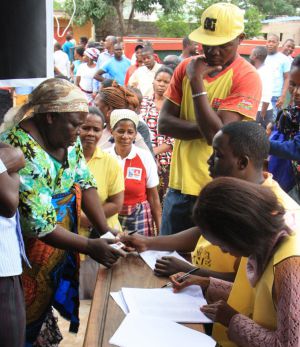
Nyusi, Dhlakama o Simango. Los mozambiqueños lo van a tener más complicado que nunca en las elecciones que el país celebra este miércoles, después de 45 días de campaña electoral. Por primera vez se contempla la posibilidad de que el candidato del hegemónico Frelimo (el desconocido Filipe Nyusi) tenga que ir a una segunda vuelta. Por primera vez no se descarta que la oposición de siempre, elRenamo con su líder de siempre Afonso Dhlakama, gane, empate o pierda (ser relegado a tercer partido). Por primera vez, un tercero, elMovimiento Democrático de Mozambique (MDM), de Daviz Simango, surge con empuje suficiente como para romper el status quo político del país.
Pese a las cualidades de los aspirantes a la presidencia, la mayor novedad no se llama Filipe Nyusi, Afonso Dhlakama o Daviz Simango. Se llama nueva ley electoral. Firmada a principios de septiembre como uno de los puntos del acuerdo de paz entre el partido gobernante Frelimo y el opositor Renamo, permite los representantes de los candidatos en los colegios electorales. También se ha aprobado el acceso al recuento de votos a los observadores internacionales y a los periodistas. En principio son las elecciones con más garantías de la historia de Mozambique;. también lo ha sido su campaña electoral. Salvo un par de incidentes, no ha habido brotes de violencia.
A las elecciones presidenciales, legislativas y provinciales concurren 30 partidos, pero la atención se centra en los tres con candidatos a sustituir al actual presidente, Armando Guebuza. Su partido, el Frelimo, que gobierna desde la independencia de 1975, presenta a un candidato desconocido (Filipe Nyusi); su enemigo Renamo, por quinta vez presenta a Dhlakama; y el MDM a Simango, con mucho gancho entre los jóvenes urbanos, y ya gobernando en ciudades como Nampula y Beira, la segunda más grande del país, tras la capital, Maputo.
Simango, nacido en Tanzania, parece llamado a romper con la bipolaridad Frelimo-Renamo, que ha desangrado al país desde su independencia. Tras ella, ambos partidos se enzarzaron en una guerra civil que duró 16 años. En 1992, en Roma, Dhlakama fue uno de los firmantes del acuerdo de paz que, con intermitencias, se mantuvo hasta el 21 de octubre del pasado año. En ese mes, el ministro de Defensa, el hoy rival electoral Filipe Nyusi, ordenó bombardear la base guerrillera del Renamo en la sierra de Gorongosa. Dhlakama sobrevivió, aunque no su colaborador más próximo. Los ataques armados se extendieron por el país y el Renamo amenazó con dividirlo por encima del río Save, donde su guerrilla es más fuerte.
En septiembre, las dos organizaciones firmaron la paz y, después de cinco años, Dhlakama pisaba Maputo, escoltado con diplomáticos de varias embajadas. La ley electoral y el acceso paritario al Ejército (50% para Frelimo y 50% para Renamo) fueron los puntos claves para pactar el alto el fuego.
El MDM de Simango puede beneficiarse del hastío de una población que no mejora sus condiciones de vida en medio de esa dualidad, que él llama Frenamo. Más de la mitad de la población sigue sumida en la pobreza y no ve ninguno de los beneficios que le debía acarrear ese crecimiento sostenido del país por encima del 7%. Sus gigantescas minas de carbón a cielo abierto y los yacimientos de gas no redundan en mejorar el nivel de vida de las clases bajas.
Alrededor de 9 millones de personas han sido registrados en el censo electoral, de los 25 millones de habitantes. Finalizada el domingo la larga campaña, las apuestas siguen a favor del de siempre, el Frelimo, se llame como se llame su candidato; pero también se coincide en que el escenario del nuevo parlamento no se parecerá al actual, con sus 191 diputados del Frelimo; 51 de Renamo y 8 del MDM. La respuesta del pueblo, con unas urnas más transparentes que nunca, pueden romper los sueños de Nyusi, Dhlakama o Simango.
Thai state group PTT Exploration and Production (PTTEP) said Monday it planned to invest up to US$1 billion in a project in Mozambique within 5 to 6 years beginning in 2015, financial news agency Reuters reported.
The group’s chief executive, Tevin Vongnavich, noted that the project aims to be producing 10 million tons of liquefied natural gas from late 2018 or early 2019.
In 2012 the Thai state group acquired Irish company Cove Energy, which had an 8.5 percent share of the Area 1 block in the Rovuma Basin, northern Mozambique, operated by US-based Anadarko Petroleum. (macauhub/MZ)
Kenya, Uganda and Rwanda are in the final stages of deciding on a consultant to oversee building a pipeline to pump the region’s new oil bonanza to the coast for export, a senior Kenyan energy ministry officials said on Thursday. In June, the three countries invited bids for a consultant to oversee a feasibility study and initial design for the construction of a 1,300-km (808-mile) oil pipeline to transport crude to the Kenyan coast.
“We are in the final stage of negotiating with the consultant who will do a feasibility study and the front end engineering design for a crude oil pipeline which should run from Hoima to coastal region of this country,” Joseph Njoroge, principal secretary at the Ministry Energy and Petroleum told an east African oil and gas conference.
“Very soon, early next month,” Martin Heya, commissioner of petroleum at the same ministry said of the award timing.
Njoroge said the consultant would be required finish the study within five months of the award.
In addition to the pipeline, the consultant would be required to supervise the construction of a fibre optic cable from Hoima in Uganda through the Lokichar basin in northwest Kenya to Lamu, and tank terminals in Hoima, Lokichar and Lamu.
The project will also involve the construction of a 9-km pipeline from the Lamu tank terminal to an offshore mooring buoys.
Kenya’s energy ministry said earlier this year the aim of having a single consultant for the whole project was to ensure consistency in the quality of the whole pipeline.
East Africa has become potentially lucrative for international oil firms after Kenya and Uganda’s commercial oil finds and discoveries of gas off the coast of Tanzania and Mozambique.
Tullow Oil and Africa Oil, which control blocks in Kenya, have estimated discoveries in the South Lokichar basin at 600 million barrels, a level experts say is enough to make a pipeline viable even without Uganda.
In neighbouring Uganda, the government estimates its crude reserves at 3.5 billion barrels.
Njoroge put the estimated crude oil recoverable reserves at about 1 billion barrels from the tertiary Rift Valley Basin, and about 1 trillion cubic standard feet of natural gas in the Anza Basin, and about 750 billion cubic feet of gas in the Lamu Basin, all in Kenya.(Edited by Reuters)
Texas-based Anadarko has cleared this portion of forest in Mozambique for a new onshore drilling site. So far, its gas-export project has cost roughly $1 billion as Anadarko tries to finalize deals to sell the gas. MUSTAFAH ABDULAZIZ FOR THE WALL STREET JOURNAL
PALMA, Mozambique—Few roads lead to this fishing village on the eastern shores of Africa. Drinking water and electricity are in short supply. Hazards include venomous snakes, malaria-bearing mosquitoes and gun-toting antigovernment rebels.
But this is where Anadarko Petroleum Corp. wants to build one of the biggest projects ever attempted by a Western energy company. It has pledged to install acres of air-conditioned housing, an airstrip and a port—and to relocate almost 3,000 villagers currently living in mud huts.
The search for oil has drawn companies to remote locations throughout the petroleum industry's history. But Anadarko isn't here for black gold. The American company is after something more abundant, albeit less lucrative: natural gas located about 30 miles offshore.
There is more than just one catch, though, with one of the largest energy discoveries in decades. The nearest viable customers are a hemisphere away. And it may cost tens of billions of dollars to tap the gas. Deep-pocketed buyers have expressed interest in the project, but some have yet to commit.
"Oil is probably easier," concedes Don MacLiver, the executive in charge of the Mozambique project's development. But like many major oil companies, Texas-based Anadarko has to go with the opportunities available. These, he says, include "large gas discoveries in remote locations."
ENLARGE
This is the challenge for many of the biggest energy companies operating around the globe: Natural gas, not oil, accounts for two-thirds of the petroleum reserves discovered over the last decade, according to data from consulting firm IHS Inc. And many of the largest finds are nowhere near homes and businesses that can burn the fuel.
The Mozambique project, which has run up about $1 billion in costs for Anadarko thus far, is among the most extreme efforts to convert such huge discoveries into marketable energy. With customers so far away, Anadarko plans to build giant freezer-like devices to chill the gas to the temperature of the ice-encrusted moon that orbits Jupiter. The process converts gas into a liquid state so that it can be loaded onto refrigerated tankers and shipped by sea, like oil.
Exporting this fuel can provide companies with a longer, steadier stream of cash flow than pumping oil, but without crude's heftier profit margin.
Other big energy outfits are working on similar projects. Italy's Eni SpA, for instance, is planning one adjacent to Anadarko's.
Companies including the U.K.'s BG Group and Norway's Statoil ASA are planning another such venture to capitalize on gas they've struck off the coast of Tanzania, Mozambique's neighbor to the north.
Many analysts estimate the global demand for liquid natural gas, or LNG, will double in 20 years, led by fast-growing economies in Asia. Europe's demand for ocean-borne gas imports may also rise as countries look for alternatives to gas piped in from Russia.
"We've never seen in the history of the industry this amount of planned capacity," says Chris Holmes, senior director of IHS, referring to liquefied-gas export projects.
"A giant liquefied natural gas plant in the fishing village of Palma, Mozambique promises to raise the quality of life for residents. But the project comes with concerns. Photo Mustafah Abdulaziz for The Wall Street Journal"
But the projects in east Africa will have to compete against many others, including some in similarly remote but less politically challenging areas, like Australia and Alaska. Mozambique's gas will also face competition from shale gas in the U.S., where existing infrastructure lowers the cost of exporting it.
Anadarko's bet on Mozambique is particularly bold. With a market capitalization of $54.9 billion, it would become the first U.S. company of its size to tap, liquefy and export gas. Such projects have previously been the domain of giants like Exxon Mobil Corp. andRoyal Dutch Shell PLC, which pull in 30 times the revenue of Anadarko.
The expected tab for drilling the wells and building the initial two plants to chill the gas in Palma—as much as $16 billion—is more than Mozambique's $15.3 billion gross domestic product in 2013. With a 26.5% stake, Anadarko's share of the costs would be roughly $4.2 billion.
The company harbors some even grander plans. Over the next few decades, it envisions building as many as 14 refrigerated plants here, says Mr. MacLiver, the Anadarko executive. Such a scale could rival the world's biggest hub for exporting liquefied gas in Qatar.
But the price tag could rise considerably. Since 2000, the cost of building LNG projects has more than tripled, according to consulting firm Merlin Advisors LLC. The LNG projects in east Africa won't have the foreign-exchange risks of plants in Australia, where costs have ballooned, and some analysts don't expect to see similar cost blowouts. But rival projects in the region could stretch the market for skilled labor and materials and push up prices.
Anadarko executives say they are confident they can control costs in Mozambique, noting that its gas is closer to shore than rival projects and the wells are more prolific.
Still, making LNG is so expensive that Anadarko and its partners won't commit to it without some guarantee they can turn a profit. They are currently trying to sign up Asian buyers for about 60% of the LNG, using contracts that extend over decades. So far, however, the consortium—including companies from Japan, Thailand and Mozambique's state-owned energy firm—has disclosed only tentative deals with buyers.
"We're engaged with the notion of getting married," Al Walker, Anadarko's chief executive, said of the agreements in May. Final contracts would leave around 40% of LNG to be sold on the open market.
Anadarko has still managed to come out ahead on its roughly $1 billion Mozambique investment. The company earlier this year sold 10% of its interest to India's ONGC Videsh Ltd. for $2.6 billion.
Anadarko had planned to make a final decision on moving forward with the project later this year, but a spokesman now says it may take until 2015. Similarly, the company's goal of selling LNG by 2018 could slip into 2019—a target that some analysts still consider too ambitious.
Meanwhile, complications on the ground remain. Palma is among the least developed regions in this former Portuguese colony. Even today, women carry buckets of water on their heads as they return from communal taps. Fishermen work from small wooden boats and dry their catch along the beach on raised nets.
But the discovery of natural gas in 2010 has begun to visibly change life here. Men on bicycles share the road with four-wheel-drive pickups bearing the Anadarko logo.
"The gas is a promise of development," says Abdul Razak Noormahomed, Mozambique's deputy minister of mineral resources. The government, he says, wants some of the gas to stay in the country to spur industrial development.
In 2012, Anadarko began paying the country for annual rights to use about 17,000 acres inhabited by several small villages. Nearly 3,000 villagers will have to be resettled, losing their land, crops and ancestral gravesites. Anadarko is working on a plan to compensate them, including building new homes and clearing land for farming.
The resettlement, derided by local critics as a land grab, isn't going over smoothly. Local rights group Centro Terra Viva said that last year villagers in one of the most populated areas that will be affected by the resettlement refused to meet with government and Anadarko representatives who had come to speak to them about the process.
Anadarko's in-country head John Peffer says the company takes concerns about the community seriously and that it does need the community support.
Similar efforts at resettlement in Mozambique have backfired. In Tete, an inland province with rich coal deposits, thousands of people who lived near mines say they were moved by U.K.-based Rio Tinto PLC and Brazil's Vale SA to a place ill-suited for agriculture and too far from water. Protesters have demonstrated frequently outside the mines and blocked railways to disrupt coal shipments.
A spokesman for Rio Tinto says the company was working with the resettled communities and providing training to help with local crop development. At the end of July, Rio Tinto announced plans to exit the troubled mine altogether and agreed to sell the coal mine to India's International Coal Ventures Pvt. Ltd. for $50 million. A spokeswoman for Vale says the company is trying to improve infrastructure in the area.
Compounding local angst, few in Palma have the skills to land a job working on the gas project. And while the influx of workers has been good for fish prices, Ali Mequit, a 30-year-old fisherman, says he worries that gas drilling is pushing fish farther out to sea.
And then there is the question about what will happen if the project comes to a halt and the workers and companies leave. "They will move on," says Mr. Mequit, "but our lives will have been disrupted."
Five of 30 ships ordered by Ematum arrive in Mozambique
19.08.2014 - in MacauHub >
Five of the 30 ships ordered by Mozambican tuna fishing company Empresa Moçambicana de Atum (Ematum) from a shipyard in Cherbourg, France, have arrived in Mozambique, Fishing Minister Victor Borges said two days ago.
The minister also said that the ships would start operating at the end of the year. Ematum ordered 24 fishing vessels, including line fishing boats and trawlers, and six patrol boats, costing between 200 million (US%267 million) according to the French press.
Ematum took on a loan of US$850 million in the European bond market for this acquisition, which was undersigned by the Mozambican government.
According to Angolan news agency AI the difference of almost US$500 million will be spent on radar equipment, satellite communications, onshore facilities, technology transfer and training.
Ematum is a state company, which is 34-percent owned by state stake holding company Instituto de Gestão das Participações do Estado (Igepe).
Fishing company Empresa Moçambicana de Pescas (Emopescas) and investment management company Gestão de Investimentos, Participações e Serviços (GIPS) also each own 33 percent of Ematum.
In its turn, Emopescas is 80-percent owned by the Mozambican State and 20 percent by fishing fund Fundo de Fomento Pesqueiro (FFP) and GIPS is owned by state social and state security service Serviços Sociais dos Serviços de Informação e Segurança do Estado (Sersse).